

Benefits of Integrating AI Voice Agents Directly With ViciDial
Evaluate direct AI integration through reporting, suppression, troubleshooting, and the operational cost of keeping campaign records consistent.
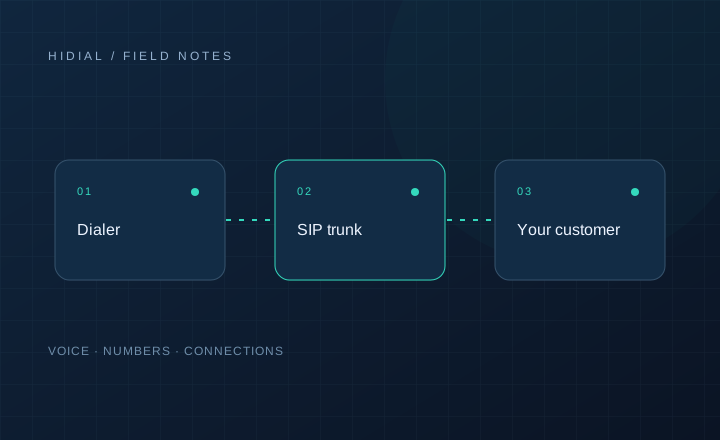
A direct integration earns its place when a supervisor can follow a call from the campaign record through the AI interaction and the final sales outcome. This article uses direct integration to mean that the AI workflow participates in the existing ViciDial operation through controlled voice and data interfaces. The AI service can still run outside the dialer.
Give each record a clear owner
Choose one authority for campaign eligibility, one for call events, and one for the final sales outcome. They may be separate systems. The important part is knowing which one wins if values disagree.
For example, the AI can propose a callback time and submit the conversation result. The campaign or CRM should record the accepted callback only after the appropriate rules are applied. A late summary should never reopen a record that a human rep already closed.
ViciDial documents a Non-Agent API for operations including lead lookup and updates. Check the functions, fields, and permissions in your installed version before designing a writeback. ViciDial Non-Agent API
Trace failures without comparing disconnected dashboards
Save the same attempt identifier alongside the dialer call reference, AI session, and transfer result. When a customer says the call went silent, those references let the operator compare what happened on each leg.
Build a short exception report. Include calls with a connected AI session and missing campaign result, transfer requests with no agent connection, and outcomes recorded after a lead was changed elsewhere. Assign an owner to reconcile each type of exception.
Apply suppression consistently
A stop request that exists only in the AI transcript cannot reliably inform later campaign decisions. Send the approved suppression event through a controlled integration and verify that the next eligibility check reads it.
Document how the system behaves when the write fails or arrives twice. Preserve the original event for investigation, pause follow-ups that depend on it, and avoid replacing a newer suppression decision with an older lead update.
Estimate the integration's operating cost
Count the time spent on routing, data mapping, monitoring, and recovery. Reusing campaign and queue context can reduce manual reconciliation. It also means the integration must keep working when one component changes its API or credentials.
Start with a single outcome that matters, such as a successful handoff with matching lead context. Compare the manual work and exception rate before expanding. Track whether the team can replay a failed event without placing a second call.
For the call flow itself, see building an AI opener inside ViciDial. Contact HiDial to discuss the voice path and the data your team needs to carry between systems.